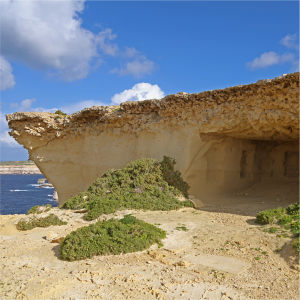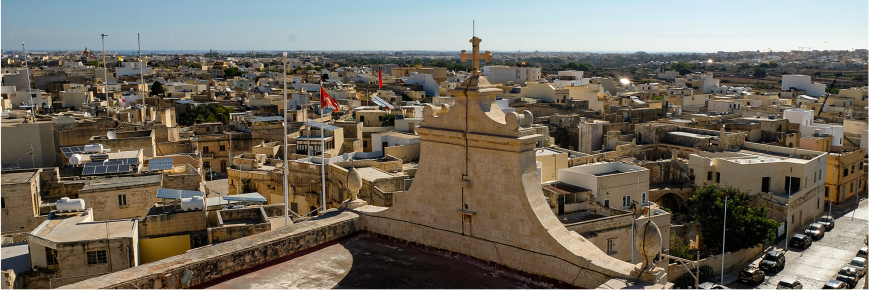
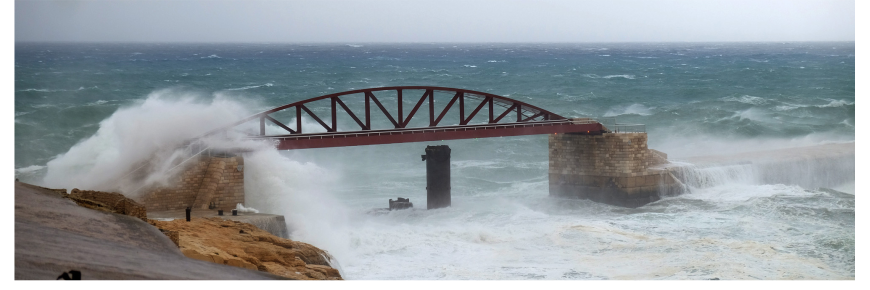
In the heart of the Mediterranean, the Maltese Islands have always been shaped by both human activity and continuous atmospheric forces. Bombing, wars, coastal erosion, earthquakes, wave action, heatwaves, salt crystallisation, wind and hail all represent interacting factors that, over time, contribute to the gradual transformation of the Maltese landscape and built environment.
In recent years, climate change has taken a central role in the national agenda, with increasing attention given to strategies aimed at mitigating its impacts. The effects are increasingly visible. The Maltese Islands have been affected by a series of severe weather events that have tested their long-standing resilience.
Among these, the 2022 storm event brought strong coastal surges that contributed to the partial collapse of a historic wall at the Bighi promontory. More recently, a further intense storm event caused significant damage along the southern coast of Malta.
The Superintendence of Cultural Heritage plays an active role in the protection of these vulnerable heritage contexts and is engaged in ongoing discussions with national stakeholders to develop strategies aimed at reducing the risk of irreversible damage caused by increasingly intense meteorological events.
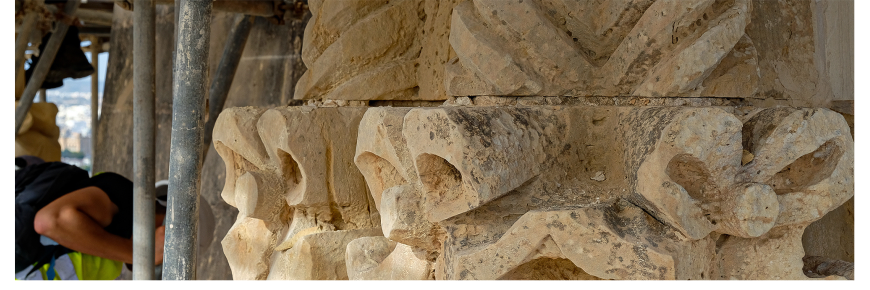
At the same time, SCH is actively involved in monitoring reconstruction works in affected areas, as well as in the restoration and maintenance of major bastions and fortifications across the Maltese archipelago, many of which are particularly exposed to long-term weathering and environmental stress.
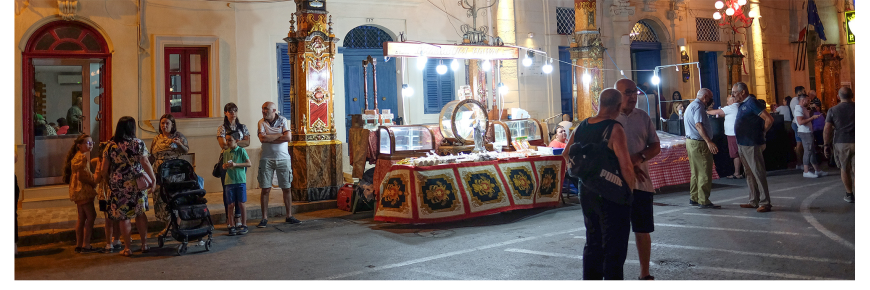
Preserving Our Past to Build Our Future reminds us that our heritage is not static. By protecting it today, we ensure that future generations continue to be inspired, informed, and connected through the stories of the past. European Heritage Days (EHD) 2026 is taking place all throughout October.
Together, let us celebrate and protect our heritage—not just as relics, but as guiding stories for our future.