European Heritage Days: Unique Material, Finite Resources
- Categories European Heritage Days 2026, Events
- Date August 12, 2026
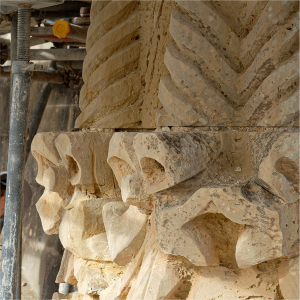
The Maltese Archipelago is the result of a geological process that took place over approximately 35 million years. The Globigerina Limestone (Franka), which has profoundly shaped Maltese architecture and the landscape, was formed over a period of around 25 million years.
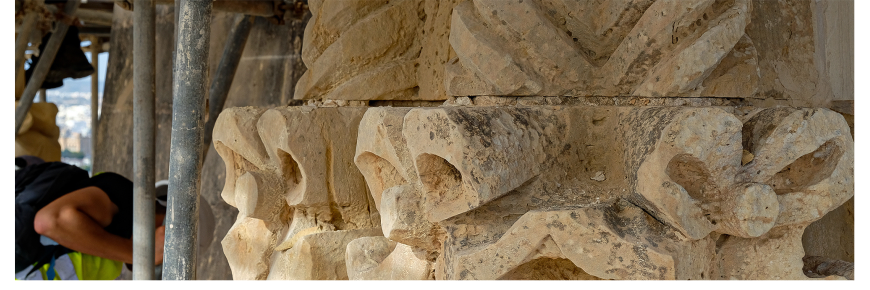
Its uniqueness lies in its warm yellowish tone and its relatively low hardness, which makes it exceptionally easy to work. At the same time, its porosity and fragility define it as a “living stone”, requiring continuous care for its preservation.
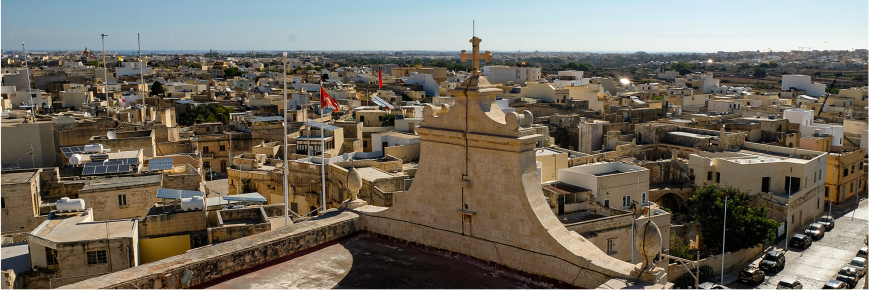
This combination of characteristics has enabled its extensive use in construction and in the creation of extraordinary sculptural and decorative elements, which have shaped the Maltese built environment. These intrinsic properties have also made it the material of choice for centuries in the construction of monumental, religious, and prestigious buildings, reflecting the various powers that have governed Malta throughout history and marking the passage of time.
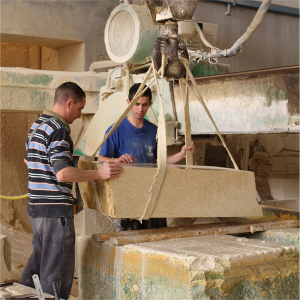
Today, however, the intrinsic properties of this stone, together with the progressive depletion of quarry resources, pose a real challenge for the Maltese construction sector. For several years, research has been exploring alternative solutions, ranging from the reuse of construction and demolition waste to the development of compatible alternative materials.
In particular, the University of Malta is conducting studies on reconstituted limestone blocks and the reuse of quarry and demolition waste, within the framework of a more efficient circular economy approach to construction materials.
Other experiments are exploring the use of geopolymers and alternative binders that do not rely on traditional cement. The Superintendence of Cultural Heritage, as the national regulatory authority, is aware of these developments and is expected to play a key role in future strategies addressing this nationally significant challenge.
Preserving Our Past to Build Our Future reminds us that our heritage is not static. By protecting it today, we ensure that future generations continue to be inspired, informed, and connected through the stories of the past. European Heritage Days (EHD) 2026 is taking place all throughout October.
Together, let us celebrate and protect our heritage—not just as relics, but as guiding stories for our future.
You may also like