For one night only, the whole of Valletta comes alive for Notte Bianca. Taking place on Saturday 3 October 2026, Notte Bianca is a free cultural festival open to the public that transforms the capital into a lively celebration of …


For one night only, the whole of Valletta comes alive for Notte Bianca. Taking place on Saturday 3 October 2026, Notte Bianca is a free cultural festival open to the public that transforms the capital into a lively celebration of …
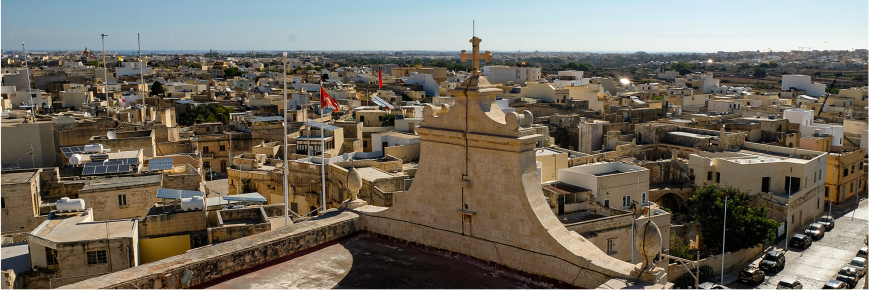
Rapid demographic growth and increasing urbanisation pose significant challenges to the fragile balance that has long defined the Maltese Islands. Adding to this complexity is the pressure of tourism, which brings substantial flows of visitors into the narrow streets and …
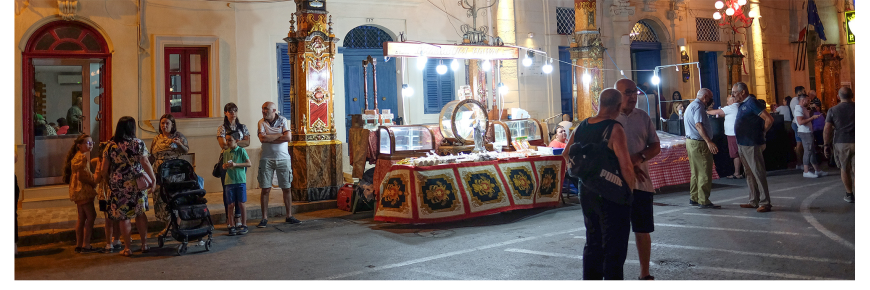
The town remains one of the most powerful expressions of a community’s identity and shared values. More than a physical environment, it embodies collective memory, culture and social relationships. Over the centuries, Maltese towns evolved around churches, squares and streets …
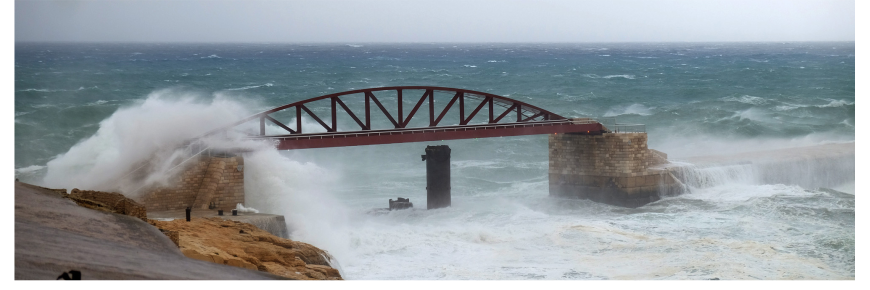
In the heart of the Mediterranean, the Maltese Islands have always been shaped by both human activity and continuous atmospheric forces. Bombing, wars, coastal erosion, earthquakes, wave action, heatwaves, salt crystallisation, wind and hail all represent interacting factors that, over …
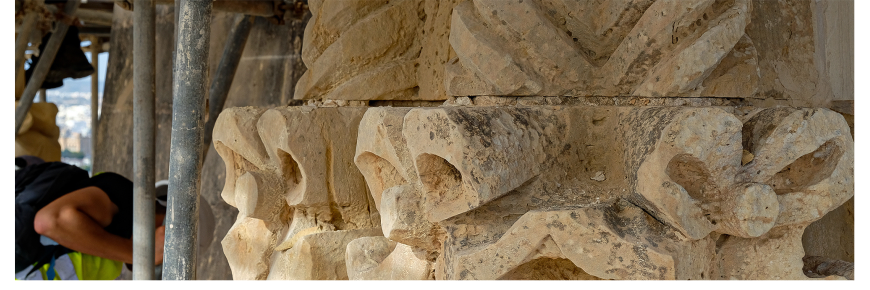
The Maltese Archipelago is the result of a geological process that took place over approximately 35 million years. The Globigerina Limestone (Franka), which has profoundly shaped Maltese architecture and the landscape, was formed over a period of around 25 million …
The conservation and protection of cultural heritage are universally recognised principles. However, their practical implementation depends on the transmission and promotion of specialised craft skills and conservation techniques, without which it would be impossible to safeguard this legacy for future …